
From his debut as a minor character to his enduring status as a beloved icon, the story of what is Goofy from Mickey Mouse is a journey through animation history. This exploration delves into the origins of Goofy, tracing his evolution from a clumsy sidekick to a multifaceted personality who has charmed audiences for generations. We’ll uncover the secrets behind his distinctive laugh, his penchant for slapstick, and his surprisingly relatable character traits that have made him a staple of the Disney universe.
Goofy’s enduring appeal lies not only in his comedic antics but also in his capacity for warmth and genuine affection. His presence has profoundly influenced the comedic styles of the Mickey Mouse cartoons, and his relationships with other characters, particularly his son Max, have added depth and emotional resonance to the series. Prepare to rediscover the charm and enduring appeal of this classic animated character.
What are the origins of Goofy’s character within the context of the Mickey Mouse universe

Goofy, one of Disney’s most beloved and enduring characters, didn’t always have the name or the established personality we know today. His journey began as a supporting character in the early Mickey Mouse cartoons, gradually evolving from a simple gag character into a fully realized personality. This evolution reflects the creative process of early animation, where characters were developed and refined through experimentation and audience response. Goofy’s transformation showcases how Disney’s animators honed their craft, shaping him into a character that resonated with audiences for generations.
Goofy’s initial appearances were marked by his clumsiness and a distinctive, high-pitched laugh. He wasn’t immediately envisioned as the lovable, dim-witted friend of Mickey and Donald, but rather as a figure whose antics provided comic relief. Over time, his role expanded, and his personality was carefully crafted, leading to the Goofy we know and love.
Initial Appearances and Personality Establishment
Goofy’s debut was in the 1932 cartoon “Mickey’s Revue,” where he appeared under the name “Dippy Dawg.” He was initially portrayed as an elderly, slow-witted character with a pronounced laugh. This initial version of the character was used primarily for providing visual gags and slapstick comedy. Dippy Dawg’s character design was also notably different from the Goofy we are familiar with, featuring a longer face and a more pronounced chin. His role was relatively minor, but his presence was significant as it marked the introduction of a character that would eventually become a staple of the Mickey Mouse universe. The character’s awkwardness and clumsiness were immediately apparent, setting the stage for his future development.
The transition from Dippy Dawg to Goofy involved several changes in both his visual appearance and personality. The animators began to refine his design, making him younger and more athletic-looking. The most significant shift was in his personality. While he retained his clumsiness, he evolved into a more optimistic and well-meaning character. This shift was gradual, but it was essential to establishing Goofy as a character audiences could connect with and root for. His distinctive laugh, a key element of his identity, became a consistent feature, instantly recognizable and a source of comic relief.
Evolution of Design and Mannerisms
Goofy’s design and mannerisms underwent several transformations throughout his history, reflecting the evolution of animation techniques and the changing demands of storytelling. These changes were not just aesthetic; they also shaped how audiences perceived and related to the character.
- Early Design (Dippy Dawg): In “Mickey’s Revue,” Dippy Dawg was an elderly character with a long face, a pronounced chin, and a generally unkempt appearance. His movements were slow and deliberate, emphasizing his age and clumsiness. His initial outfit was a simple pair of overalls, a design element that would carry over into later iterations.
- Mid-1930s to 1940s: As Goofy became a regular character, his design was streamlined. His face became shorter, his chin less pronounced, and his overall appearance more youthful. He was given a distinctive hat and vest, and his movements became more exaggerated and energetic. This era saw the development of his signature “goofy” walk, characterized by his slouched posture and wide-legged stride. His voice also evolved, becoming deeper and more distinctive.
- Later Years (Post-1950s): While his basic design remained consistent, Goofy’s appearance was subtly updated over the years. His features were softened, and his clothing was modernized. In some modern adaptations, his design is simplified to accommodate the constraints of digital animation, but his core characteristics—his hat, vest, and signature laugh—remain intact.
Goofy’s mannerisms are crucial to his character. His iconic laugh, a unique blend of a chuckle and a yelp, is one of the most recognizable sounds in animation. His clumsy, often gravity-defying movements are another key element of his character. He’s often depicted falling, tripping, or getting into awkward situations, but he always bounces back with his characteristic optimism.
Prominent Animated Shorts and Character Development
Several animated shorts were instrumental in shaping Goofy’s character development, solidifying his personality, and establishing his role within the Mickey Mouse universe. These shorts showcased his comedic talents and explored different facets of his personality.
- “Goofy and Wilbur” (1939): This short is significant because it introduced Wilbur, Goofy’s pet grasshopper. It highlights Goofy’s ability to befriend anyone, and it also showcases his ability to accept and adapt to any situation.
- “How to Ride a Horse” (1941) and “How to Play Golf” (1944): These “How To” shorts were critical in defining Goofy’s persona as a well-meaning but incompetent individual. These shorts were also important for their comedic timing and use of visual gags. These cartoons demonstrated Goofy’s role as a teacher, providing lessons on various subjects, and he always found a way to struggle through, creating a humorous contrast between his intention and the results.
- “The Art of Skiing” (1941): This short perfectly encapsulates Goofy’s physical comedy and his ability to turn any situation into a hilarious misadventure. His exaggerated movements and reactions are on full display, making it a classic example of his slapstick style.
- “Goofy’s Glider” (1940): This short is significant because it demonstrates Goofy’s enthusiasm for learning and trying new things, even if he is not always successful. It’s an example of his optimistic outlook on life, which has been consistent throughout his evolution.
These animated shorts solidified Goofy’s role as a comedic foil to Mickey Mouse and a relatable character for audiences. His clumsy antics, his optimism, and his unwavering good nature made him one of Disney’s most beloved characters, a testament to the power of character development and the enduring appeal of slapstick comedy.
How does Goofy’s unique personality and behavior contrast with other characters in the Mickey Mouse series
Goofy’s character stands out in the Mickey Mouse universe due to his distinct personality and behavior, offering a comedic counterpoint to the more established characters. His inherent optimism and often clumsy nature provide a source of consistent humor and contribute significantly to the dynamic of the series. His interactions with Mickey, Donald, and others create a rich tapestry of comedic scenarios, enriching the narrative and appealing to audiences of all ages.
Goofy’s Optimism and Clumsiness Compared to Mickey and Donald
Goofy’s personality is a direct contrast to the more pragmatic and often frustrated personalities of Mickey Mouse and Donald Duck. While Mickey is generally portrayed as level-headed, resourceful, and a loyal friend, Goofy’s naiveté and unwavering optimism frequently lead him into humorous situations. Donald Duck, on the other hand, is known for his short temper, pessimism, and tendency towards misfortune, making Goofy’s cheerful disposition even more striking. Goofy approaches life with an almost childlike wonder, rarely letting setbacks dampen his spirits. This unwavering positivity, combined with his physical clumsiness, makes him a comedic powerhouse. His famous “gawrsh” and signature laugh are emblematic of his joyful approach to life. In contrast, Mickey’s more measured responses and Donald’s outbursts highlight the contrasting personalities and the comedic potential of their interactions. For example, while Mickey might carefully plan a fishing trip, Goofy would likely stumble into the boat, lose his fishing rod, and still manage to have a good time. This stark difference in approach to life is the foundation of many of the series’ funniest moments.
Goofy’s Interactions with Other Characters
Goofy’s interactions with other characters are frequently the source of both humor and heartwarming moments. His actions often trigger comedic reactions from others, highlighting the contrasting personalities within the ensemble cast. The following table illustrates some key examples:
| Character | Goofy’s Action | Reaction of Other Characters | Outcome |
|---|---|---|---|
| Mickey Mouse | Goofy attempts a complicated task, like building a house. | Mickey offers helpful advice and tries to assist, often with a mix of amusement and exasperation. | Goofy’s efforts, though often unsuccessful, are always enthusiastic, and Mickey often ends up helping him fix the inevitable mishaps. |
| Donald Duck | Goofy’s innocent antics inadvertently cause problems for Donald. | Donald becomes frustrated and angry, often yelling at Goofy in a display of his trademark temper. | Goofy remains oblivious to Donald’s anger, continuing his cheerful behavior. The contrast in their reactions highlights the comedic dynamic. |
| Pluto | Goofy attempts to play with Pluto, often misunderstanding the dog’s signals. | Pluto initially enjoys the attention but becomes confused by Goofy’s clumsy attempts at interaction. | Goofy’s interactions with Pluto provide slapstick humor and illustrate his gentle nature, even towards animals. |
| Pete | Goofy unwittingly foils Pete’s schemes, usually through sheer accident. | Pete is enraged and attempts to retaliate. | Goofy’s obliviousness frustrates Pete, leading to comedic confrontations where Goofy unintentionally triumphs. |
Narrative Function of Goofy’s Character
Goofy’s character serves a vital narrative function within the Mickey Mouse universe. He acts as a comedic foil, providing a contrast to the more grounded personalities of Mickey and Donald. His presence allows for the exploration of themes like friendship, perseverance, and the importance of a positive outlook. His often-clumsy actions create opportunities for slapstick humor, appealing to a wide audience. He also embodies a certain innocence and unwavering optimism that resonates with viewers. Goofy’s interactions with other characters provide opportunities for conflict, resolution, and character development, enriching the overall narrative. For example, Goofy’s struggles often highlight Mickey’s leadership qualities and Donald’s emotional volatility. His unwavering friendship and positive attitude also serve as a reminder of the importance of kindness and acceptance. The comedic relief Goofy provides, alongside his ability to overcome challenges with a smile, make him an integral part of the Mickey Mouse universe.
What are the various roles and occupations Goofy has portrayed throughout the Mickey Mouse cartoons
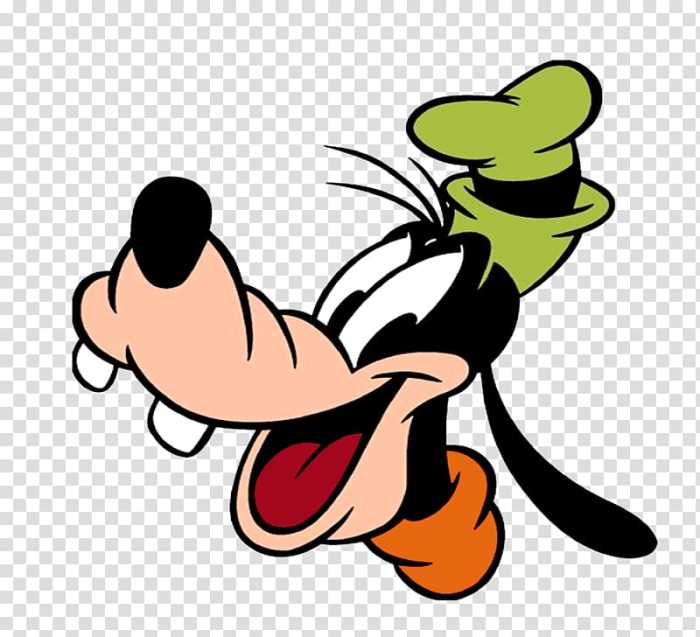
Goofy’s character is defined by his versatility and his willingness to try anything, often with hilarious results. His career path through the Mickey Mouse cartoons is a testament to this, showcasing a range of professions that highlight his inherent clumsiness and optimistic spirit. His diverse roles, while frequently leading to comical failures, contribute significantly to his relatability and the enduring appeal of the character.
Goofy’s Diverse Career Path
Goofy’s employment history is as varied as it is entertaining. He has been a sportsman, a scientist, a salesman, and a performer, among other roles. Each role provides an opportunity for slapstick humor, stemming from his awkward movements, his misunderstandings of instructions, and his unwavering, if often misplaced, enthusiasm. This adaptability, however, is a core element of his character, demonstrating his resilience and his refusal to be discouraged by setbacks.
Goofy’s willingness to embrace new challenges, regardless of his skill level, is a constant source of humor. He embodies the idea that it’s the effort, not necessarily the outcome, that counts. The cartoons often emphasize this through his perseverance and his ability to maintain a positive attitude, even when faced with utter chaos.
Here are some specific examples of Goofy’s roles in animated shorts:
- Athlete: In shorts like “The Olympic Champ” (1942), Goofy attempts various Olympic sports, resulting in comical failures. His attempts at diving, gymnastics, and other events are characterized by his unique style of clumsiness. The humor is derived from the contrast between the graceful movements expected of an athlete and Goofy’s awkward execution.
- Scientist: In “How to Be a Scientist” (1950), Goofy humorously tackles scientific concepts, often misinterpreting experiments and creating comical explosions. The educational format of these shorts is cleverly subverted by Goofy’s ineptitude, making learning fun.
- Salesman: Goofy has taken on the role of a salesman in various shorts, attempting to sell products and services with mixed results. His enthusiasm often outstrips his sales skills, leading to humorous interactions with customers. The humor often stems from his misunderstandings of sales techniques and his inability to read social cues.
- Performer: Goofy has also graced the stage and screen. In “The Art of Skiing” (1941), Goofy demonstrates how to ski. He provides an instructional demonstration on how to ski. However, his performance is a lesson in how not to do things. The comedy is rooted in the contrast between the instructional format and Goofy’s slapstick approach.
Goofy’s relatable nature stems from his imperfections. His failures, rather than diminishing his appeal, make him a character that audiences can empathize with. His unwavering optimism, even in the face of adversity, is a source of inspiration and humor.
“Gawrsh!”
, a frequent exclamation, encapsulates his innocent and good-natured personality. This simplicity and resilience are key to his enduring popularity. The roles he plays, and the ways in which he plays them, are crucial to the storytelling, adding humor and warmth to the Mickey Mouse universe.
How has Goofy’s character influenced the animation and comedic styles of the Mickey Mouse series

Goofy’s arrival in the Mickey Mouse universe significantly broadened the comedic palette, injecting a brand of slapstick and physical humor that resonated with audiences and influenced the evolution of animation techniques. His clumsy antics, exaggerated reactions, and signature vocalizations became integral to the series’ comedic identity. This shift from more subtle humor to broader, more visually driven gags had a lasting impact, influencing subsequent animated features and establishing a comedic framework that continues to be referenced today.
Impact on Animation and Comedic Styles
Goofy’s influence on the animation and comedic styles of the Mickey Mouse series is undeniable. His character served as a catalyst for exploring new forms of physical comedy and expanding the possibilities of animated expression. The animators capitalized on Goofy’s inherently awkward nature to create a comedic style heavily reliant on exaggerated movements, unexpected reactions, and visual gags.
This shift can be seen in the animation techniques themselves. Goofy’s character encouraged the use of:
- Stretching and Squashing: Animators used this technique extensively to emphasize Goofy’s movements, making his falls, stumbles, and reactions more impactful and humorous. A simple fall could be drawn out and amplified, adding to the comedic effect.
- Exaggerated Expressions: Goofy’s facial expressions were often wildly exaggerated, with his eyes widening, his mouth contorting, and his ears flapping in response to events. This emphasis on expressive features helped convey his emotional state and heightened the comedic impact.
- Speed and Timing: The timing of Goofy’s actions was crucial. Animators utilized quick cuts, sudden pauses, and unexpected movements to build anticipation and deliver comedic payoffs. The contrast between Goofy’s clumsy actions and the smooth animation of other characters further amplified the humor.
This style influenced the broader comedic approach of the series, moving away from simple character interactions to more visually driven narratives. The success of Goofy’s comedic style led to a greater emphasis on physical humor in other animated shorts and features.
Signature Moves and Iconic Elements
Goofy’s signature moves and vocalizations are instantly recognizable and have become iconic elements of his character, influencing the character’s legacy. These elements, meticulously crafted by animators, are key to understanding Goofy’s influence on the animation style.
The following elements defined Goofy’s persona:
- The “Goofy Holler”: This distinctive yell, a high-pitched, drawn-out “ga-hyuk,” became synonymous with Goofy’s character. It was used in moments of surprise, excitement, or panic, instantly signaling his presence and adding a layer of comedic flair. This vocalization has been imitated and parodied countless times.
- The “Goofy Grin”: His wide, gap-toothed grin, often accompanied by a slightly vacant expression, became another signature element. This grin, sometimes displayed just before a mishap, was a visual cue to the audience, signaling the impending chaos.
- The Goofy Fall: Goofy’s tendency to stumble and fall, often in spectacular and unexpected ways, was a cornerstone of his physical comedy. These falls were carefully choreographed, with animators using stretching and squashing techniques to maximize the comedic effect.
These elements were not just random gags; they were carefully designed to create a unique and memorable character.
Visual Description of Memorable Scenes
Here are descriptions of memorable scenes, suitable for an artist to create illustrations:
* Scene 1: “How to Ski”
* Background: A snowy mountain slope with skiers, trees, and a ski lift in the background. The sky is a bright, clear blue.
* Characters: Goofy, dressed in a brightly colored ski outfit, is attempting to ski. Other skiers, depicted with varying levels of skill, are present.
* Goofy’s Actions: Goofy is in mid-air, having just launched off a small jump. His skis are pointing in opposite directions, and his arms are flailing wildly. His expression is one of surprise and slight panic, with his mouth open in a “Goofy Holler.” A small cloud of snow surrounds him. The other skiers are looking at him with varying expressions of amusement and concern.
* Scene 2: “The Art of Self Defense”
* Background: A dojo with a wooden floor, a tatami mat, and various training equipment in the background.
* Characters: Goofy, dressed in a karate gi, is facing a stern-looking instructor. Other students are practicing martial arts techniques.
* Goofy’s Actions: Goofy is attempting a karate chop, but his arm is bent at an awkward angle, and his expression is one of complete confusion. He is about to trip over his own feet, with his eyes wide and his mouth forming a “Goofy Grin.” The instructor is shaking his head in disapproval, while other students try to suppress laughter.
These descriptions provide detailed visual cues for artists to accurately depict the scenes and capture Goofy’s unique brand of humor. The emphasis is on physical comedy, exaggerated expressions, and the use of the “Goofy Holler” and “Goofy Grin” to enhance the comedic effect.
What is the significance of Goofy’s relationship with his son Max in the context of the Mickey Mouse franchise
Goofy’s paternal relationship with his son Max offers a significant and often overlooked layer of depth to the Mickey Mouse franchise. This father-son dynamic provides a framework for exploring themes of family, adolescence, and the challenges of intergenerational relationships, adding a layer of emotional resonance to the typically comedic narrative. It contrasts with the more superficial character interactions of the earlier cartoons, demonstrating the evolution of storytelling within the franchise.
Evolution of Goofy’s Role as a Father
Goofy’s role as a father, particularly concerning Max, undergoes a notable transformation throughout the franchise’s history. Initially, Goofy’s parenting style was implied in the classic shorts, but the relationship was largely undeveloped. Later iterations, particularly “A Goofy Movie,” delve into the complexities of their bond, offering a more nuanced portrayal of a single-parent family. This evolution reflects changing societal views on family structures and the importance of parental roles.
The relationship between Goofy and Max allows the series to address the universal experience of growing up, navigating peer pressure, and seeking independence. The core of their dynamic often revolves around Goofy’s well-meaning but often clumsy approach to parenting, creating both comedic situations and heartwarming moments.
Instances of Goofy’s Parenting Style
Goofy’s parenting style is characterized by his unwavering optimism, his willingness to engage in playful activities, and his somewhat unconventional methods. This results in numerous comedic scenarios.
- Goofy’s enthusiastic participation in Max’s life, even when embarrassing, is a recurring theme. For example, he might try to fit in with Max’s friends or enthusiastically support his endeavors, regardless of his own abilities.
- His tendency to misinterpret situations or misunderstand Max’s feelings frequently leads to comical misunderstandings. However, these misunderstandings are always rooted in love and a desire to connect with his son.
- The heartwarming aspect of their interactions is evident in their mutual affection and the underlying respect they have for each other. Despite their differences, they always manage to find common ground.
Goofy’s parenting style often contrasts with more traditional approaches, but it highlights the importance of unconditional love and acceptance.
Differences in Portrayal: Classic Cartoons vs. “A Goofy Movie”
The portrayal of Goofy and Max differs significantly between the classic cartoons and “A Goofy Movie.”
- In the classic cartoons, Max is present in a limited capacity, and the father-son relationship is less developed. Goofy is primarily depicted as a comedic character, and his interactions with Max serve to further this comedic element. The focus is on slapstick humor and situational comedy.
- “A Goofy Movie” provides a more in-depth exploration of their relationship. The film focuses on Max’s teenage angst, his desire for independence, and his struggles to connect with his father. Goofy, in turn, is portrayed as a loving but somewhat overbearing father who is trying his best to understand his son.
- The film allows for a more emotionally resonant narrative. Goofy’s journey to reconnect with Max, and Max’s eventual appreciation for his father’s efforts, highlights the importance of family bonds and the value of accepting one another’s imperfections.
“A Goofy Movie” represents a shift in the franchise’s storytelling, prioritizing character development and emotional depth over purely comedic gags. The film’s success demonstrates the enduring appeal of this relatable father-son relationship.
Final Summary
In conclusion, what is Goofy from Mickey Mouse is far more than just a simple animated character; he is a symbol of joy, resilience, and the enduring power of laughter. From his humble beginnings to his iconic status, Goofy’s evolution reflects the creative ingenuity of Disney animation. His influence extends beyond the screen, impacting comedic styles and endearing himself to audiences worldwide. Goofy’s legacy continues to grow, ensuring that his unique brand of humor and heart will resonate for generations to come.
